

The Prophet
A Reflection on The Prophet by Kahlil Gibran
There are books that try to teach us something, and there are books that try to help us see the world differently. I think The Prophet belongs to the second category, even though it often appears to be the first. It isn't an instruction manual or a collection of life advice. It's a series of poems connected by a single thread: that our lives aren't as neatly divided as we often imagine. Again and again, Gibran dissolves the boundaries we place between ideas we think of as opposites. Joy and sorrow. Good and evil. Freedom and responsibility. Love and loss. The things we try hardest to separate often turn out to depend on one another.
The chapter that has stayed with me the longest is "On Joy and Sorrow." It was first shared with my by a dear friend (Ziska) in highschool.
Gibran writes that "the deeper that sorrow carves into your being, the more joy you can contain." It's one of the most beautiful descriptions of grief I've ever read. Not because it glorifies suffering, but because it reminds us that sorrow is born from love. We grieve because we cared. We ache because something mattered. The space left behind by loss isn't evidence that something has gone wrong. It's evidence that something precious once lived there.
That idea feels deeply relevant in therapy. We often arrive wanting to get rid of difficult emotions. We want less fear, less sadness, less anger, less shame. But those emotions rarely exist on their own. Fear often protects longing. Anger protects hurt. Shame points toward our desire to belong. The answer isn't always to eliminate what we're feeling. Sometimes it's to understand what those feelings are trying to protect.
The same pattern appears throughout The Prophet. In "On Good and Evil," Gibran suggests that goodness and evil are not fixed identities but expressions of the same human condition. People are not simply good or bad. They are capable of generosity and cruelty, wisdom and foolishness, compassion and selfishness. That doesn't excuse harmful behaviour, but it does invite us to look beneath it. As a therapist, I find that perspective difficult to ignore. People make sense. Even the parts of ourselves we struggle to understand usually have a history worth listening to.
Another chapter that has stayed with me is "On Self-Knowledge." Gibran gently pushes back against certainty, reminding us that understanding ourselves is a lifelong process. Every answer reveals another question. Every insight opens another door. That's one of the reasons I love this work. We are never finished becoming ourselves.
What strikes me most about The Prophet is that Gibran rarely tells us what to do. He isn't interested in creating rules or offering easy answers. Instead, he offers perspective. He invites us to look at familiar experiences from a different angle and trust that wisdom will emerge from the conversation between them.
Not every passage has aged perfectly, and some of Gibran's ideas inevitably reflect the era in which he was writing. But poetry isn't meant to function like a scientific paper. Its purpose is different. It gives shape to emotional truths that are difficult to explain any other way.
For me, The Prophet is ultimately a book about integration. It reminds us that life isn't made up of separate pieces competing with one another. Joy and sorrow belong together. Freedom carries responsibility. Love makes loss inevitable. Even our struggles often point toward something we value deeply.
I think that's why this book has endured for more than a century. It doesn't tell us what to believe. It invites us to see ourselves, and one another, with a little more compassion and a little more curiosity.
If there's a single message I've taken from Gibran over the years, it's this: we don't become more fully human by separating ourselves from the parts of life we find uncomfortable. We become more fully human by recognizing that they belong together, and that we belong to one another.
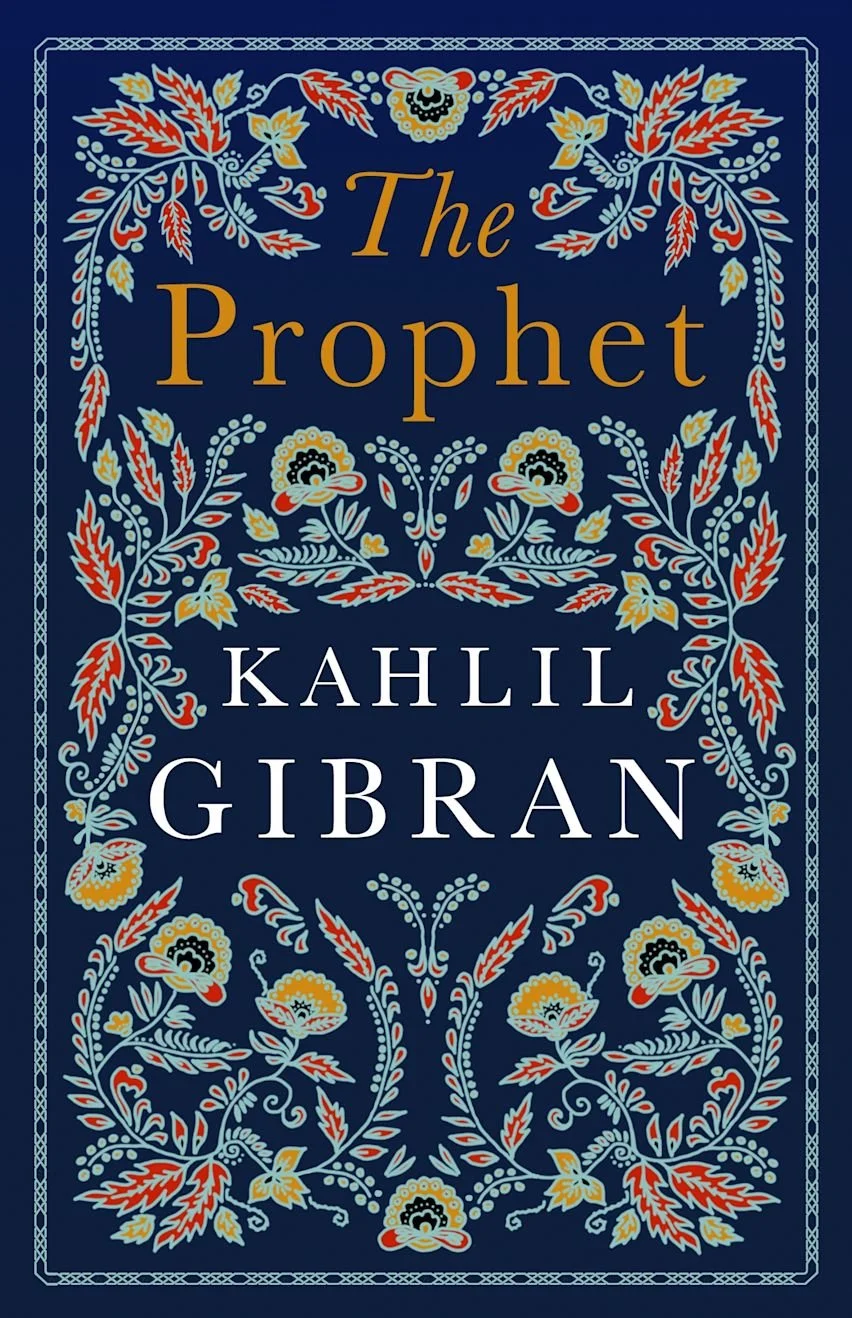
Available through Cedar Canoe Books
If you'd like to support a wonderful independent bookstore, you can purchase this book through Cedar Canoe Books clicking on the image of the book cover.
BEARMIND NOTES
Worth Reading?
It’s my favourite book.
Who I Recommend This To
Anyone navigating grief or loss, therapists, artists, poets, and anyone searching for meaning, connection, or a different way of seeing the world.