

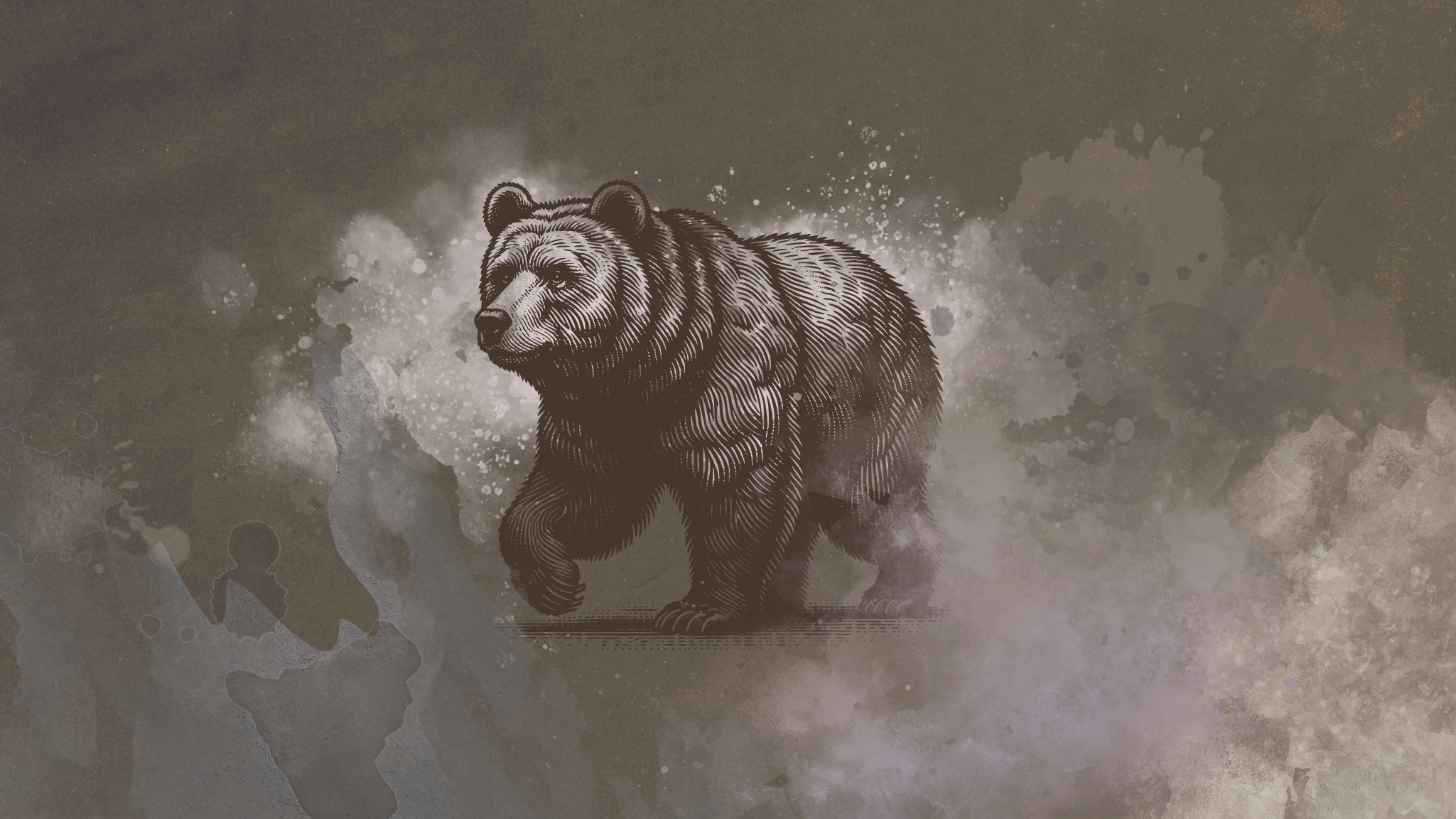
WHAT IS BEHIND THE NAME
BEARMIND
BearMind is more than the name of my practice. It's a philosophy that shapes the way I think about therapy, growth, and what it means to be human.

More Than Just a Name
Every therapy practice has a name. Most have a story. This is mine.
For as long as I can remember, people have compared me to a bear. I'm a big guy. I've been called a teddy bear more times than I can count, partly because I'm known for giving good bear hugs. If you ask my friends, they'll probably tell you I'm generally pretty warm and approachable, though I can be a little grumpy before my first cup of coffee.
Somewhere along the way, I realized the comparison had stuck. It wasn't really a nickname. (The closest I ever came was being called "Beast" in high school football, and thankfully, that didn't survive past that). It had simply become part of how people experienced me, and eventually, part of how I experienced myself.
One summer, while working as a camp counsellor, a camper was worried that bears might wander into the cabin during the night. I remember telling them not to worry because I was the scariest thing in the woods.
Thankfully, they laughed. Sometimes I still tell people that, to let them know they’re safe. I don’t know if it works, but it usually gets a smile.
Maybe being born in British Columbia, where bears have always been part of the landscape, played a role as well. And now I live in Muskoka, where bears are a part of the iconography of everyday life.
I even have a sign hanging by my front door that says “An old bear lives here with his honey.” In some ways, they've always felt familiar to me, both literally and symbolically.
When it came time to name my practice, BearMind felt obvious. Only afterwards did I notice the phrase bear in mind.
That turned out to be a happy accident, but it also became an important part of what the name means to me. Therapy asks us to bear a lot of things in mind. Our history. Our relationships. Our emotions. The stories we've inherited about ourselves. The ways we've learned to survive.
The funny thing about names is that, if you live with them long enough, they begin to reveal things you hadn't noticed before. The more I thought about it, the more I realized the bear represented many of the same qualities I hope to cultivate in myself and in the people I work with.
Over time I realized that BearMind wasn't just a name I'd chosen. It had quietly become a pretty good description of the way I already approached therapy. It's a reminder to stay curious. To slow down. To look beneath the surface before deciding what something means.
One of the things I love most about being a therapist is that I get to see something we often miss in ourselves.
People make sense.
Not always immediately, and not always on the surface, but if we're willing to ask enough questions, our thoughts, emotions, behaviours, and relationships almost always begin to tell a story.
I've never met someone who was "just anxious," "just angry," or "just avoidant." I've met people whose lives taught them that those ways of being were necessary. Somewhere along the way, they learned that staying busy, staying guarded, staying agreeable, or staying in control made life a little safer.
Those patterns aren't random. They're adaptations. Most of them began as remarkably clever solutions to difficult problems. The challenge is that our lives change, and sometimes the strategies that helped us survive yesterday quietly begin getting in the way of the life we want to build today.

What the Bear Represents
For thousands of years, bears have appeared in stories and cultures around the world as symbols of qualities that many of us are trying to cultivate in our own lives.
-
Strength isn't the absence of struggle. It's the willingness to keep showing up, even when life is difficult.
Many of us were taught that strength means hiding our emotions, never asking for help, or pushing through no matter what. I don't think that's strength. I think real strength is being honest about where we are, asking for support when we need it, and trusting that vulnerability and resilience can exist at the same time.
-
Wisdom isn't about having all the answers. It's about knowing that there are usually more questions worth asking.
Therapy often isn't about discovering something completely new. It's about seeing familiar things from a different perspective. Sometimes that shift is enough to change everything.
-
Our minds and bodies are constantly gathering information.
Sometimes we notice it. Sometimes we don't.
Anxiety, anger, sadness, excitement, even that vague feeling that something isn't quite right, all have something to tell us. Therapy helps us become better listeners without assuming every feeling should be acted upon.
Our emotions are information, not instructions.
-
Curiosity might be the value that shapes my work more than any other.
It's easy to judge ourselves.
It's much harder, and much more useful, to ask why something makes sense.
Why do I react this way?
Why is this relationship so important to me?
Why do I keep ending up here?
Those questions usually open far more doors than self-criticism ever does.
-
Our lives reward speed. Therapy doesn't.
Some of the most important things we discover happen after we've stopped trying to solve the problem as quickly as possible. When we slow down enough to notice what's happening beneath the surface, we often find we've been answering the wrong question all along.
-
Life is unpredictable.
Relationships change. Careers change. Families change. We change.
Groundedness isn't about controlling what happens around us. It's about learning how to stay connected to ourselves while life continues to unfold.
-
Resilience isn't about avoiding hardship.
It's about discovering that hardship doesn't get the final word.
Every person who walks into therapy has already survived things that once felt impossible. Therapy isn't about pretending those experiences didn't happen. It's about helping them become part of your story without allowing them to write the ending.
-
Life rarely follows a map.
There are times when we know exactly where we're going, and times when we feel completely lost.
The wilderness can be beautiful, but it can also be uncertain, uncomfortable, and a little frightening.
Therapy isn't about handing you a map.
It's about helping you learn to navigate with greater confidence, trust yourself a little more, and remember that getting lost doesn't mean you'll never find your way.
-
Bears are incredibly present animals.
They're not worrying about next Thursday.
They're in the river.
Or sleeping.
Or eating berries.
Presence is something therapy constantly returns to.
Bear in Mind
To bear something in mind is to carry it with us. To remember it. To let it shape the way we see the world. BearMind is built on a handful of ideas that I try to carry with me every day, both as a therapist and as a person.
Bear in mind that understanding ourselves is often more useful than judging ourselves.
Bear in mind that every behaviour has a history.
Bear in mind that change usually begins with curiosity, not criticism.
Bear in mind that we are always more than the worst thing we've done or the hardest thing we've been through.
Bear in mind that while survival may have shaped us, it doesn't have to define us.
That's what BearMind has come to mean for me.
A way of approaching ourselves with compassion, curiosity, and the belief that we were always meant to do more than simply survive.
We were meant to thrive.

The BearMind Approach
My work draws from approaches like Emotionally Focused Therapy, Internal Family Systems, Narrative Therapy, and other evidence-based models, but they all point toward the same underlying belief.
People are not problems to be solved.
They are stories to be understood.
When we understand how our minds learned to survive, we gain the freedom to choose something different. We become less reactive, more intentional, and more connected to ourselves and the people around us.
That doesn't happen overnight, and it doesn't happen by pretending life is easy.
It happens one conversation at a time.
Therapy isn't about becoming someone else.
It isn't about fixing what's "wrong" with you.
It's about slowing down long enough to understand yourself.
Together, we'll explore the patterns you've developed, the stories you've inherited, the relationships that have shaped you, and the different parts of yourself that may be pulling in different directions.
We'll celebrate what's working.
We'll make sense of what isn't.
And when you're ready, we'll begin writing the next chapter together.