


INTERNAL FAMILY
SYSTEMS (IFS)
Internal Family Systems (IFS) is based on a simple but powerful idea: we all have different parts of ourselves. Rather than trying to fight or silence those parts, IFS helps us understand what they're trying to protect and how they can work together more effectively.

We All Have Different Parts
Have you ever caught yourself saying something like:
"Part of me wants to apply for the job, but another part is terrified I'll fail."
Or...
"I know I should have that conversation, but something keeps stopping me."
Most of us speak this way without thinking much about it.
Internal Family Systems begins with the idea that these experiences aren't signs that something is wrong with us. They're part of being human.
We all have different parts of ourselves with different jobs, different fears, and different hopes. Sometimes they work together beautifully. Sometimes they pull us in opposite directions.
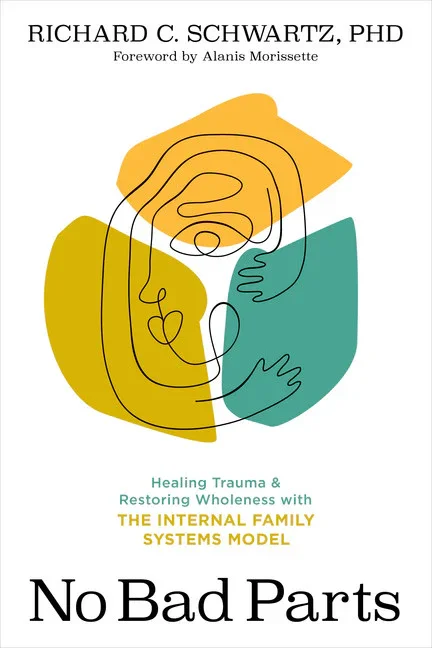
Available through Cedar Canoe Books
If you'd like to support a wonderful independent bookstore, you can purchase this book through Cedar Canoe Books clicking on the image of the book cover.
People Make Sense
One of the reasons I appreciate Internal Family Systems is that it shares one of the central ideas behind BearMind:
People make sense.
Even the parts of ourselves that frustrate us are usually trying to help.
The inner critic that constantly pushes you to do better may have learned that mistakes weren't safe.
The part that avoids difficult conversations may be trying to protect you from rejection.
The part that always stays busy may have learned that slowing down didn't feel safe.
IFS encourages us to become curious about these patterns instead of fighting them. Because when we understand what a part is trying to accomplish, we often discover that it isn't our enemy at all.
Try this: People Make Sense Reflection Sheet
A reflection sheet for slowing down a reaction and getting curious about what it may be trying to protect.
Many of the parts we struggle with today began as brilliant solutions to difficult situations.
At some point in your life, staying quiet, staying busy, staying independent, pleasing other people, or always preparing for the worst may have genuinely helped you.
The challenge is that our lives change.
Sometimes the strategies that protected us years ago quietly become the very things preventing us from living the lives we want today.
IFS isn't about getting rid of those parts.
It's about helping them recognize that they no longer have to carry the same responsibilities they once did.
Protection Isn't the Problem
Helpful Links for Understanding Parts
What Does IFS Look Like in Therapy?
In practice, Internal Family Systems is simply a different way of exploring your inner world.
Together, we might notice the part of you that's anxious before social situations, the part that becomes critical when you make a mistake, or the part that wants to avoid conflict at all costs.
Rather than asking, "How do we make this go away?" we'll often ask, "What is this part afraid would happen if it stopped doing its job?"
That shift changes everything.
When people feel understood, they often become less defensive. Interestingly, the same is true of the different parts within ourselves.
A Common Misunderstanding
One of the biggest misconceptions about Internal Family Systems is that it suggests we have multiple personalities.
It doesn't.
IFS isn't about different people living inside us. It's a way of understanding the different thoughts, emotions, and protective strategies that all of us experience throughout our lives.
It's a language for making sense of something most people already recognize: sometimes different parts of us want different things.
Is IFS Right for Me?
Internal Family Systems may be helpful if you'd like to:
Better understand your inner critic.
Develop greater self-compassion.
Work through trauma or difficult life experiences.
Understand why you feel "stuck."
Reduce shame and self-judgment.
Make sense of conflicting thoughts and emotions.
Build a healthier relationship with yourself.
Many people find IFS particularly helpful because it replaces self-criticism with curiosity.
Learn more about Internal Family Systems from the IFS Institute,
How I Use IFS
Internal Family Systems is one of the approaches that most naturally fits the way I think about therapy.
Rather than viewing anxiety, avoidance, perfectionism, anger, or self-criticism as problems to eliminate, I tend to wonder what they're trying to accomplish. That simple shift often opens conversations that would be difficult to have if we began from a place of judgment.
Depending on your needs, I integrate IFS with Emotionally Focused Therapy (EFT), Narrative Therapy, attachment theory, neuroscience, and other evidence-based approaches. Together, these perspectives help us better understand not just what you're experiencing, but why it makes sense.

One of the hardest things we can do is extend compassion toward the parts of ourselves we've spent years trying to silence. Sometimes those are the very parts that have been working the hardest to protect us.