

Man's Search for Meaning
A Reflection on Man’s Search for Meaning by Viktor E. Frankl.
There are books that teach us new techniques, and there are books that remind us why we do this work in the first place. Man's Search for Meaning belongs firmly in the second category.
Frankl's central idea is deceptively simple: we can endure almost any hardship if we have a reason to endure it. Meaning is not a philosophical luxury. It's a psychological necessity. As someone who spends much of his life helping people understand themselves, that idea feels immediately familiar.
Whether we're exploring grief, anxiety, trauma, or relationship conflict, we're often searching for the same thing. Not just What happened? but What does this mean? What does it say about us? About our relationships? About the life we're trying to build?
Frankl asks those same questions from a place few people can truly imagine. His experiences surviving Nazi concentration camps give his ideas a weight that theory alone never could. He isn't writing about suffering as an abstract concept. He's writing about surviving the unimaginable while trying to remain fully human.
One of the things I appreciate most about Frankl is that he never argues suffering is inherently good. Instead, he argues that our circumstances do not have the final say over who we become. Even when life strips almost everything away, we still retain some freedom in how we respond.
There are places where I found myself disagreeing with him. His ideas around hyper-intention, hyper-reflection, and dereflection feel like products of another era of psychotherapy. The observations still ring true, but the interventions feel incomplete by today's standards.
Where Frankl often recommends redirecting attention away from distress, I find myself thinking about emotional regulation instead. We don't always need to escape painful emotions. Sometimes we need to understand them well enough that they no longer overwhelm us. In my experience, meaning grows from that process rather than replacing it.
That isn't a criticism so much as a reminder that psychotherapy keeps evolving. Frankl laid an important foundation. Others have continued building on it. What feels especially relevant today is his challenge to the way we think about comfort. We're surrounded by messages that tell us happiness comes from minimizing stress and maximizing comfort. Frankl offers a different perspective. A meaningful life isn't necessarily an easy one. In fact, meaningful responsibility often gives us more strength than endless comfort ever could. That fits with something I've come to believe in my own work.
Self-care isn't about escaping life. It's about preparing ourselves to live it well. Rest matters. Joy matters. But so do purpose, responsibility, and choosing burdens that are worth carrying. At the same time, I think it's important not to let this idea drift into something it was never meant to be.
Some suffering is simply tragic. Some pain serves no greater purpose. No one deserves it, and not every hardship leaves us stronger. We don't need to force meaning onto every terrible experience. But we are remarkably good at making meaning after the fact. Given enough support, enough reflection, and enough time, people often discover that what they endured became part of who they are without becoming the whole story.
Long after I finished the book, two ideas stayed with me. The first is that purpose doesn't have to be extraordinary.
We often talk about finding our purpose as though it's one grand calling we'll eventually discover. Frankl reminded me that purpose can be much smaller than that. It can be raising children. Caring for a partner. Building a career we believe in. Creating art. Helping a neighbour. Doing work that matters to us. We don't have to change the world to find meaning in our lives.
The second was a metaphor Frankl uses about architecture. A structure isn't always weakened by adding weight. Given the right design, additional weight can actually strengthen it. That idea has been rattling around in my head ever since I finished the book. The same can be true of people.
The goal isn't to eliminate all stress from our lives. Some stress helps us grow. Responsibility shapes us. Challenge teaches us what we're capable of. We become stronger not because suffering is good, but because carrying meaningful burdens changes us. That doesn't mean we should seek hardship. It means we shouldn't mistake comfort for growth.
I don't think logotherapy is a complete therapeutic model for today's world, and I don't think Frankl intended it to be. What he offers is something more enduring than a technique. He reminds us that therapy isn't only about reducing symptoms. It's also about helping people reconnect with what makes life worth living.
That's ultimately what I took away from Man's Search for Meaning. Not that life becomes easier once we've found our purpose. But that almost any burden becomes lighter when we know why we're carrying it.
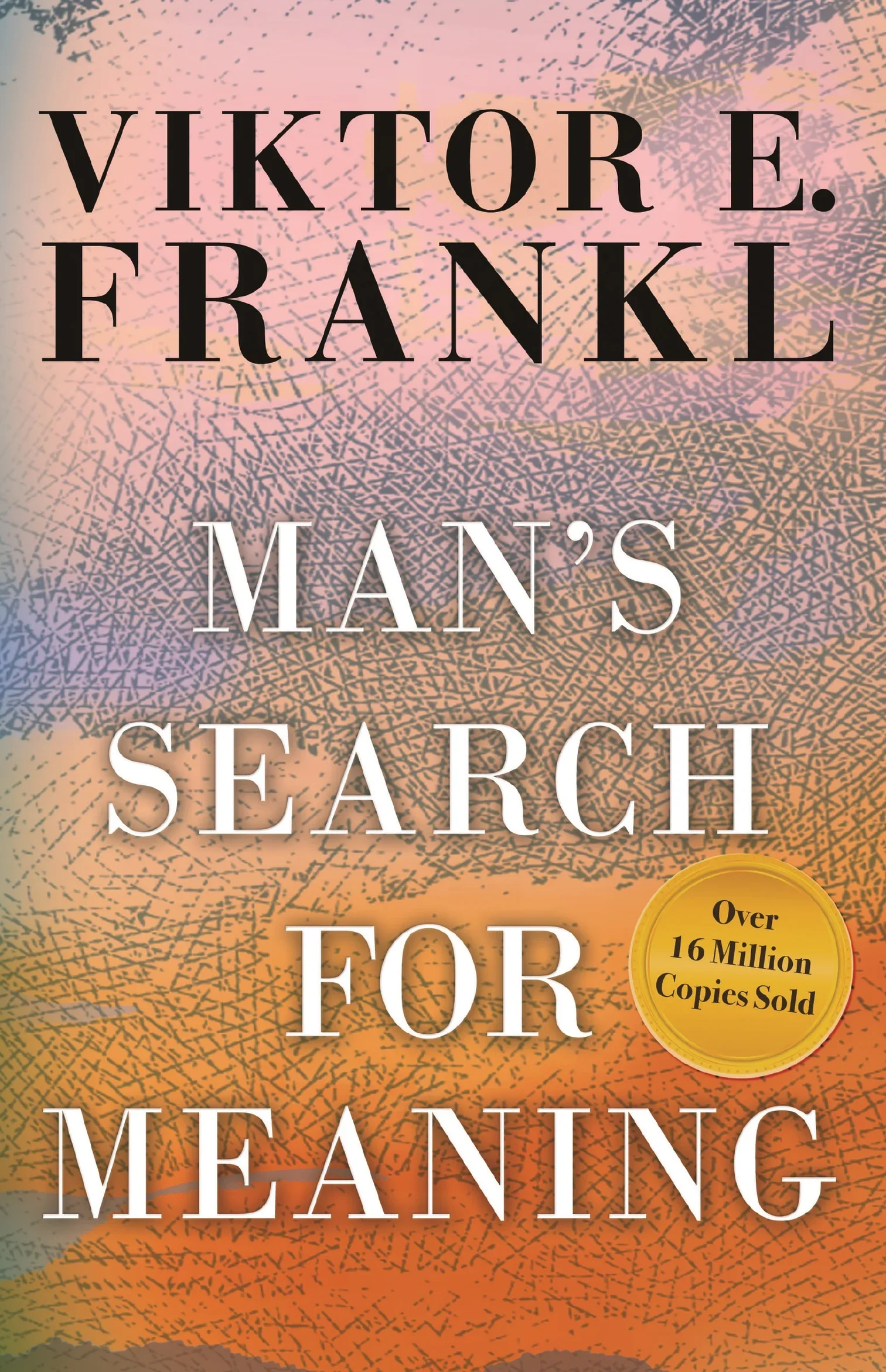
Available through Cedar Canoe Books
If you'd like to support a wonderful independent bookstore, you can purchase this book through Cedar Canoe Books clicking on the image of the book cover.
BEARMIND NOTES
Worth Reading?
Absolutely.
Who I Recommend This To
Anyone interested in psychology or personal growth.
Anyone navigating suffering, grief, or major life transitions.
Every therapist, counsellor, and coach.
Anyone wondering what gives life meaning when things fall apart.
“Those who have a ‘why’ to live, can bear with almost any ‘how’.”
“I do not forget any good deed done to me & I do not carry a grudge for a bad one.”